The Cost of Losing Faith in Your Website
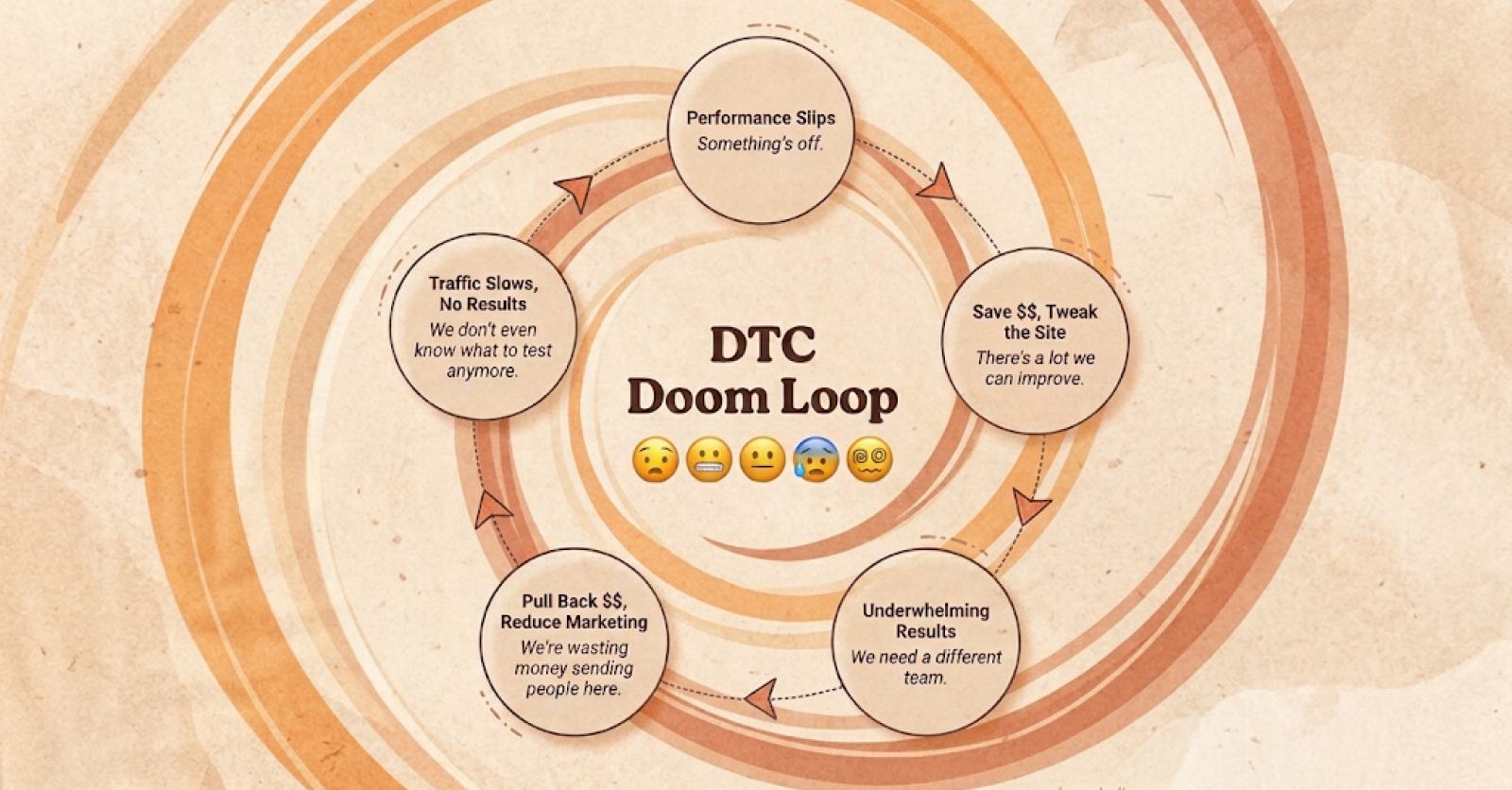
I have a theory: when a founder stops believing in their website, its underperformance becomes a self-fulfilling prophecy.
Everyone knows it’s not great, but for various reasons (time, money, internal priorities) they hold off on making a real investment.
Instead, they make smaller bets.
A tweak here. An A/B test there.
And when results don’t come, it just reinforces the belief that the website isn’t worth it.
Over the past few years, I’ve seen this same system play out with brands again and again.
Performance starts to slip.
The team doesn’t want to spend much, so they hire an agency to make improvements.
CRO enhancements. “Best practices.”
Hope for a turnaround.
When that doesn’t work, they pull back even more.
First on the site. Then on marketing.
Another agency steps in.
Same story. Same outcome.
The website becomes the scapegoat, but also the bottleneck.
Marketing slows because “we can’t justify spending to drive traffic to a site that isn’t working.”
Fewer visitors. Fewer conversions. Less data to learn from. The cycle deepens.
🌀 Performance Slips → Quick Fixes → Underwhelming Results → Pull Back on Marketing → Traffic Drops → Team Loses Faith → Performance Slips
You might call it the DTC Doom Loop 😵💫
I recently spoke with a founder of a small CPG brand who’d spent over $50k trying to escape it.
Retail was taking off. But years of decline in e-comm.
Each agency promised results. “There’s so much we can improve here.”
Each one made tweaks. Things got worse.
By the time we connected, they weren’t just looking for help—they were discouraged. Unsure what to fix. Unsure if DTC even mattered anymore.
So I asked: If you forget about performance, are you proud of how the website represents the brand?
They paused. “No.”
As we dug deeper, they shared how retailers loved their story. New packaging. New customers. Real momentum. None of that showed online. The website felt like a relic of an earlier chapter.
This is where systems-thinking matters.
Instead of optimizing in isolation, zoom out:
Does the website reflect who we are today? Where we’re headed?
Because if it doesn’t, no CRO tactic will move the needle.
CRO isn’t inherently a bad choice. But it has to make sense in the context of bigger questions. If the foundation isn’t right, optimizing the surface won’t get you very far.
“Quick wins” may seem appealing, but over time, smaller investments add up, and you’re left with a site full of bandaids. Slower. Buggier. Harder to manage.
When brands treat symptoms instead of addressing the system, they burn through budget and end up further from their goals.
It’s a fine line, but taking a step back is a good place to start.
Sometimes, breaking the cycle means asking better questions, then realigning everything to support the future, not patch the past.
Another question: If we were launching today, is this the site we’d build?
+